
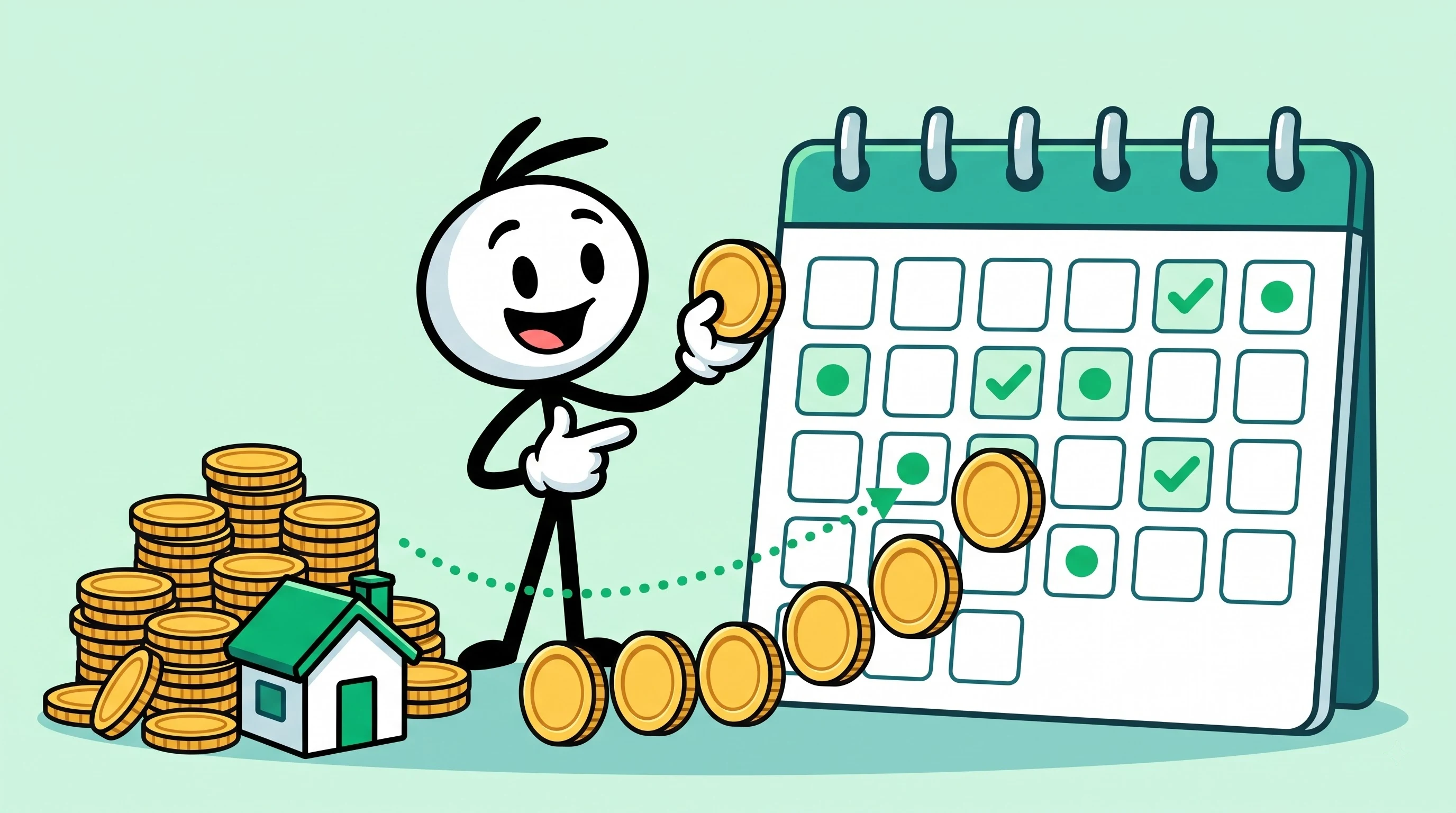
What an EMI actually is
EMI stands for equated monthly installment: one fixed payment, every month, sized so the loan hits exactly zero on the final payment. Each installment first covers that month's interest; whatever remains reduces what you owe. That split — heavy on interest early, heavy on principal late — is the whole story of amortization.
A worked example
Assumptions: borrow $10,000 at a fixed 8% annual rate, repaid over 3 years (36 payments), no fees. The EMI works out to $313.36 per month: $11,281.09 repaid in total, of which $1,281.09 is interest.
In month one, roughly $66.67 of your $313.36 is interest — over a fifth of the payment buys nothing but time. By the final year, nearly every dollar attacks principal. Reproduce it in the loan / EMI calculatorand watch the year-by-year table flip from interest to principal.
Why the term matters more than people think
Stretching the same loan over more years shrinks the monthly payment but multiplies the months you pay rent on the balance. Lenders love long terms for exactly this reason. Always compare the total repayable, not just the monthly figure — a smaller payment can be a much more expensive loan.
What the EMI leaves out
- Origination fees, insurance, and taxes.
- Variable rates that move after the quote.
- Early-repayment penalties some lenders charge.
- Daily-interest quirks and payment-timing differences.
Real offers will differ from this clean model — use it to compare structures, not to predict a lender's paperwork to the dollar. General education only, not financial advice; see the disclaimer.
Quick answers
Do extra payments help? Yes — every extra dollar skips straight past interest to principal and shortens the loan. Even small, regular overpayments compound in your favor.
Fixed or variable rate? Fixed means the EMI never moves; variable can rise or fall with benchmark rates. Fixed costs certainty, variable gambles on it.
What if I can only afford the minimum? Pay it without fail — missed payments add fees and damage the terms of everything you borrow next.