Interest is rent on money
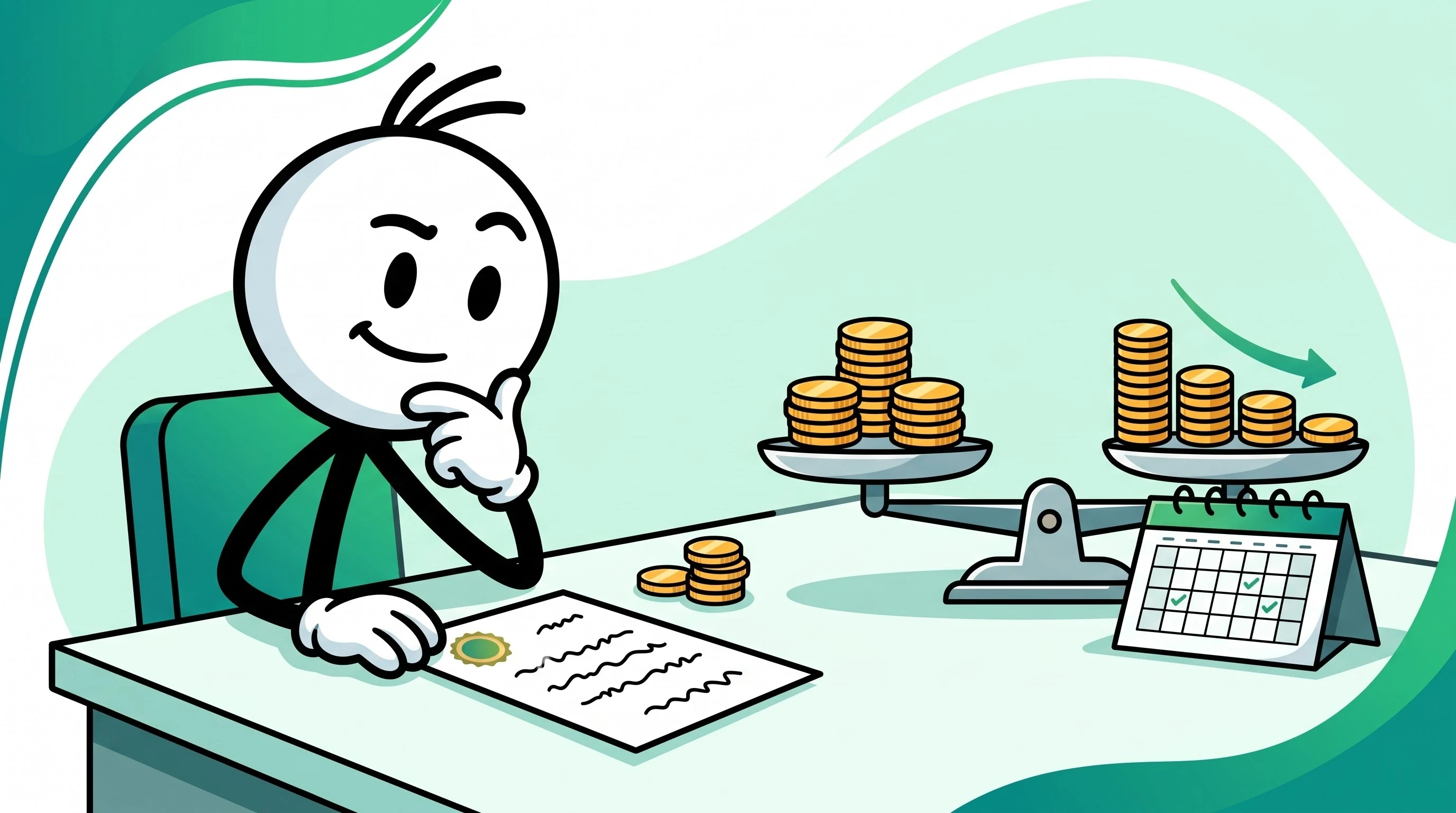
When you borrow, you pay rent on someone else's money — that's interest. The annual percentage rate tells you the yearly rent, but the true cost depends on how long you take to repay. Borrow $10,000 at 12% and repay over one year, and interest costs roughly $660. Stretch it over five years and interest costs roughly $3,300 — the same rate, five times the rent.
Minimum payments maximize profit — theirs
Paying only the minimum on revolving debt keeps you in debt the longest, which is exactly what earns the lender the most interest. Any extra payment goes straight at the principal and shortens the sentence.
Good debt vs. bad debt
Debt that funds something which grows in value or earning power — education, a reasonable mortgage — can make sense. Debt that funds consumption at high rates almost never does: the thing you bought depreciates while the interest compounds against you. Compounding works both ways.
Comparing loans
- Compare the total amount repayable, not just the monthly figure.
- A lower rate over a longer term can still cost more in total.
- Ask about fees, penalties for early repayment, and whether the rate is fixed or variable.
- Attack the highest-rate debt first while keeping everything else current.