
The difference in one paragraph
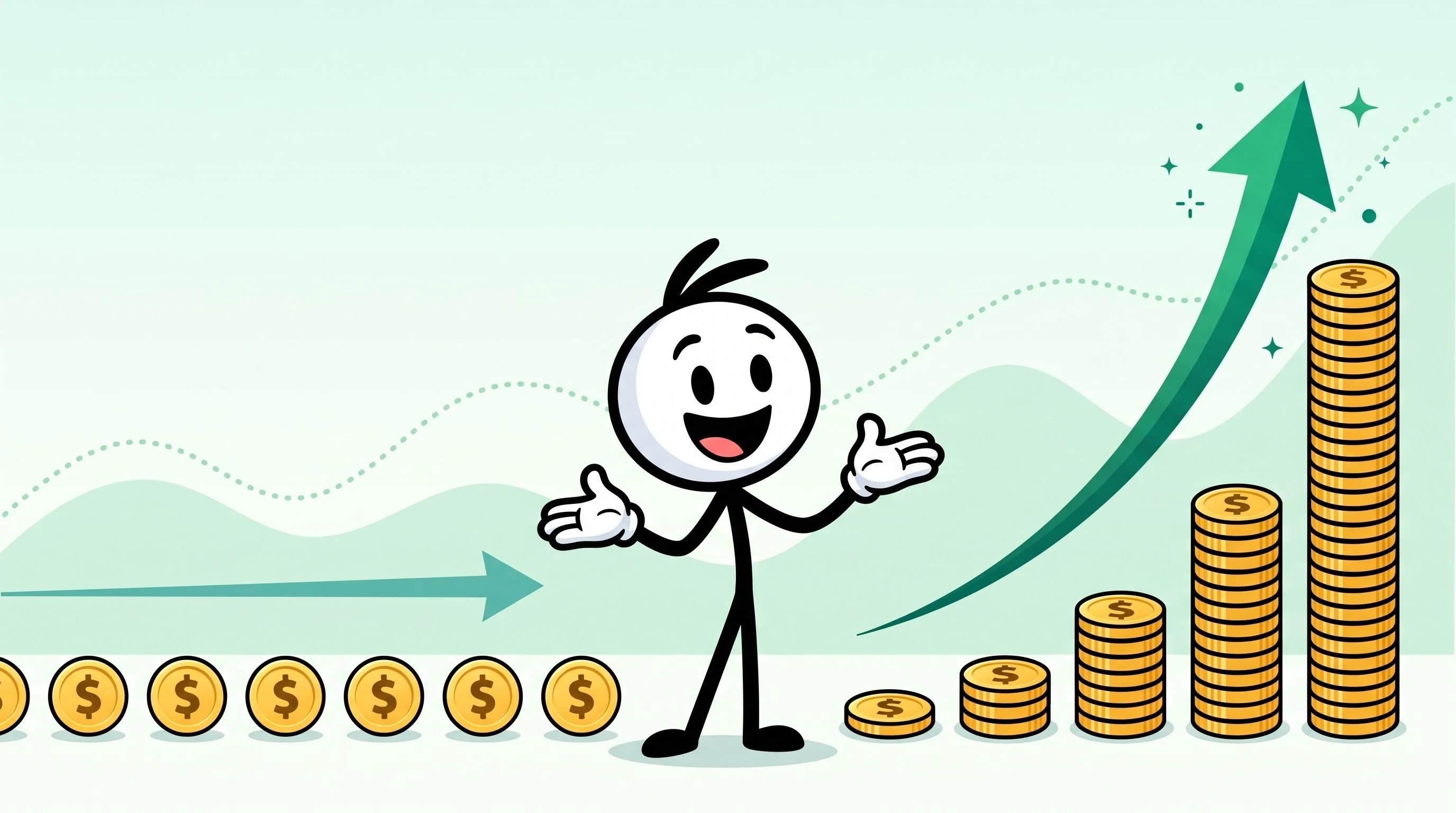
Simple interest is charged or earned only on the original amount, so it grows in a straight line. Compound interest applies to the original amount plus everything accumulated so far, so it curves upward. Same rate, same starting money — different math, different destination.
Same money, two futures
Assumptions: $5,000 at 6% per year, annual compounding for the compound column, no deposits or withdrawals:
| After | Simple interest | Compound interest |
|---|---|---|
| 1 year | $5,300.00 | $5,300.00 |
| 5 years | $6,500.00 | $6,691.13 |
| 10 years | $8,000.00 | $8,954.24 |
| 20 years | $11,000.00 | $16,035.68 |
Identical at year one, nearly $1,000 apart at year ten, over $5,000 apart at year twenty. Time is the ingredient that makes the models diverge.
When each model applies
- Simple interest shows up in some short-term loans, bonds that pay out coupons instead of reinvesting, and late-payment penalties quoted per period.
- Compound interest is the default for savings accounts, reinvested investments, credit cards, and most mortgages — anything where unpaid interest joins the balance.
When comparing products, always ask which model a quoted rate uses. A "6% simple" loan and a "6% compounding monthly" loan are different deals wearing the same number.
Quick answers
Can simple interest ever beat compound? For earning, no — at the same positive rate, compounding always wins given more than one period. For borrowing, simple is cheaper for exactly the same reason.
Why does year one match exactly? Because there is no previous growth yet for compounding to feed on. The split starts in period two.
Is this financial advice? No — it's a math lesson. See the disclaimer.